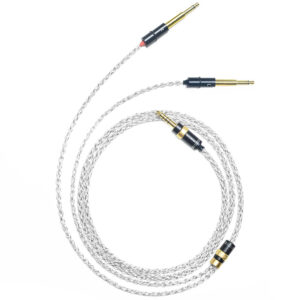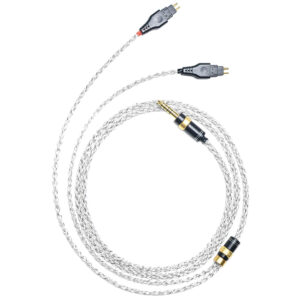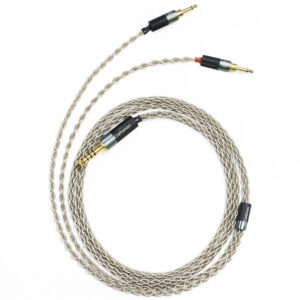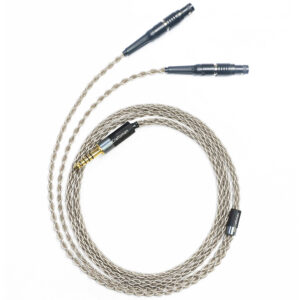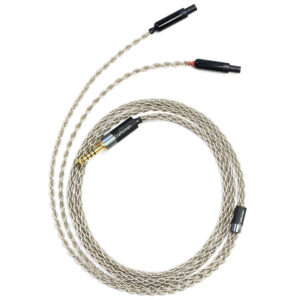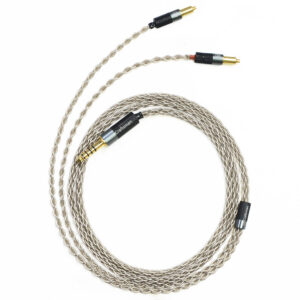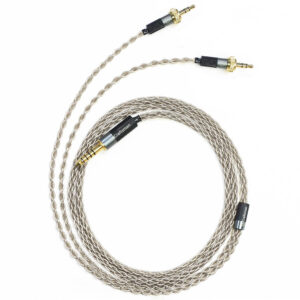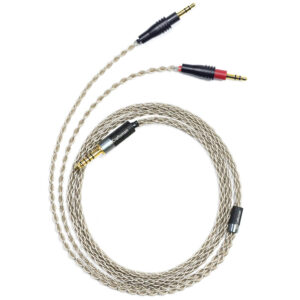
Choose a headphone cable by the exact headphone model first, then by the output on your amplifier, DAC or portable player. Connectors that look alike can use different pinouts or locking systems, so a physical fit alone does not confirm compatibility. HiFiForge offers handmade copper, silver and hybrid headphone cables with model-specific connectors and 2.5 mm, 3.5 mm, 4.4 mm, 6.35 mm or 4-pin XLR termination options. If your model is not listed, use the Custom Shop or send us the make and model before ordering so we can check the complete signal path.
How to choose a headphone cable
Start with the headphone-side connector. This is the part that plugs into the earcups, and it is often specific to a brand or model family. For example, some older OPPO and HIFIMAN headphones use dual 2.5 mm mono connectors, many Focal models use dual 3.5 mm connectors, the Sennheiser HD 800 family uses its own connector, and selected Sony models use threaded dual 3.5 mm plugs. Similar dimensions do not guarantee the same wiring. Check the compatibility list on the product page and ask us if your exact model is not named.
Next, match the source-side termination to an output your equipment actually provides. A 3.5 mm plug is normally used with a single-ended headphone output. A 2.5 mm, 4.4 mm or 4-pin XLR plug is intended for a compatible balanced output. Choosing a balanced-looking plug does not convert an unsupported source into a balanced design, so confirm the socket and the equipment manual before ordering.
Conductor material should come after compatibility and usability. As a rough listening guide, single-crystal copper is often described as warmer and fuller through the low mids, single-crystal silver as brighter with more apparent treble extension, and silver–copper or graphene hybrids as a middle path. These are reported tendencies, not guaranteed changes. For a construction-led comparison, see the copper vs silver vs hybrid audio cable guide. Fit, length, flexibility, connector security and reliable electrical contact are the improvements you can evaluate most consistently.
Use the product pages as model-specific starting points:
- 6N copper dual 2.5 mm cable for OPPO PM-1, PM-2 and compatible legacy HIFIMAN models
- 6N silver and graphene cable for compatible Focal headphones
- 6N silver and graphene cable for Sennheiser HD 800, HD 800 S and HD 820
- 6N silver and graphene cable for Sony MDR-Z7, MDR-Z7M2 and MDR-Z1R
Finally, choose a practical length. A desktop listening position may need more reach than a bedside or portable setup, but unnecessary length adds weight and cable management. When the listed options do not match your system, request a custom length, connector or termination through the Custom Shop.
Headphone cable FAQ
How do I confirm that a cable fits my headphones?
Send us the exact brand and model. We check the connector, pinout and any locking or threaded detail rather than relying only on the socket shape. The broader Headphone & IEM Cable FAQ explains why apparently identical connectors may not be interchangeable.
Will a replacement cable improve the sound?
It can reliably change fit, reach, handling, connector compatibility, durability and contact reliability. Some listeners report tonal differences between conductor structures, but the result depends on the headphones, source and listener. A cable cannot add information the equipment did not produce.
What if I need an unusual plug or length?
Use the Custom Shop and include your headphone model, source device, required plug and preferred length. Compatibility is reviewed before quotation. Custom and made-to-order terms are covered in the Returns & Refunds Policy, and workmanship coverage is explained on Warranty & Repair.
Need help matching both ends? Use the Headphone & IEM Connector Compatibility Guide to identify the headphone-side connector, then compare 2.5 mm, 3.5 mm and 4.4 mm audio plugs for the source-side termination.
-
6N Silver and Graphene Hybrid Braided
6N Single Crystal Silver & Graphene Hybrid Headphone Cable with Meze Dual 3.5mm TRS Connectors
$188.00Clear2.5mm Plug3.5mm Plug4-Pin XLR Plug4.4mm Plug6.35mm Plug -
6N Silver and Graphene Hybrid Braided
6N Single Crystal Silver & Graphene Hybrid Headphone Cable with SENNHEISER HD Series 2-Pin Connectors
$188.00Clear2.5mm Plug3.5mm Plug4-Pin XLR Plug4.4mm Plug6.35mm Plug -
6N Single Crystal Silver
6N Single Crystal Silver Headphone Upgrade Cable for Dual 2.5mm Mono Connectors
$178.00Clear2.5mm Plug3.5mm Plug4-Pin XLR Plug4.4mm Plug6.35mm Plug -
6N Single Crystal Silver
6N Single Crystal Silver Headphone Upgrade Cable for Focal Utopia
$178.00Clear2.5mm Plug3.5mm Plug4-Pin XLR Plug4.4mm Plug6.35mm Plug -
6N Single Crystal Silver
6N Single Crystal Silver Headphone Upgrade Cable for SENNHEISER HD 800, HD 800 S, HD 820
$178.00Clear2.5mm Plug3.5mm Plug4-Pin XLR Plug4.4mm Plug6.35mm Plug -
6N Single Crystal Silver
6N Single Crystal Silver Headphone Upgrade Cable for Shure SRH1440, SRH1540, SRH1840
$178.00Clear2.5mm Plug3.5mm Plug4-Pin XLR Plug4.4mm Plug6.35mm Plug -
6N Single Crystal Silver
6N Single Crystal Silver Headphone Upgrade Cable for Sony MDR-Z7, MDR-Z7M2, MDR-Z1R
$178.00Clear2.5mm Plug3.5mm Plug4-Pin XLR Plug4.4mm Plug6.35mm Plug -
6N Single Crystal Silver
6N Single Crystal Silver Headphone Upgrade Cable for TAGO Studio T3-01, T3-01-MD, T3-03
$178.00Clear2.5mm Plug3.5mm Plug4-Pin XLR Plug4.4mm Plug6.35mm Plug